IIT Madras Brain Centre Turns Mapping Research Into A National Science Bet
The Prime Minister's Chennai visit put the Sudha Gopalakrishnan Brain Centre and its high-resolution brain-mapping work in the national technology frame.
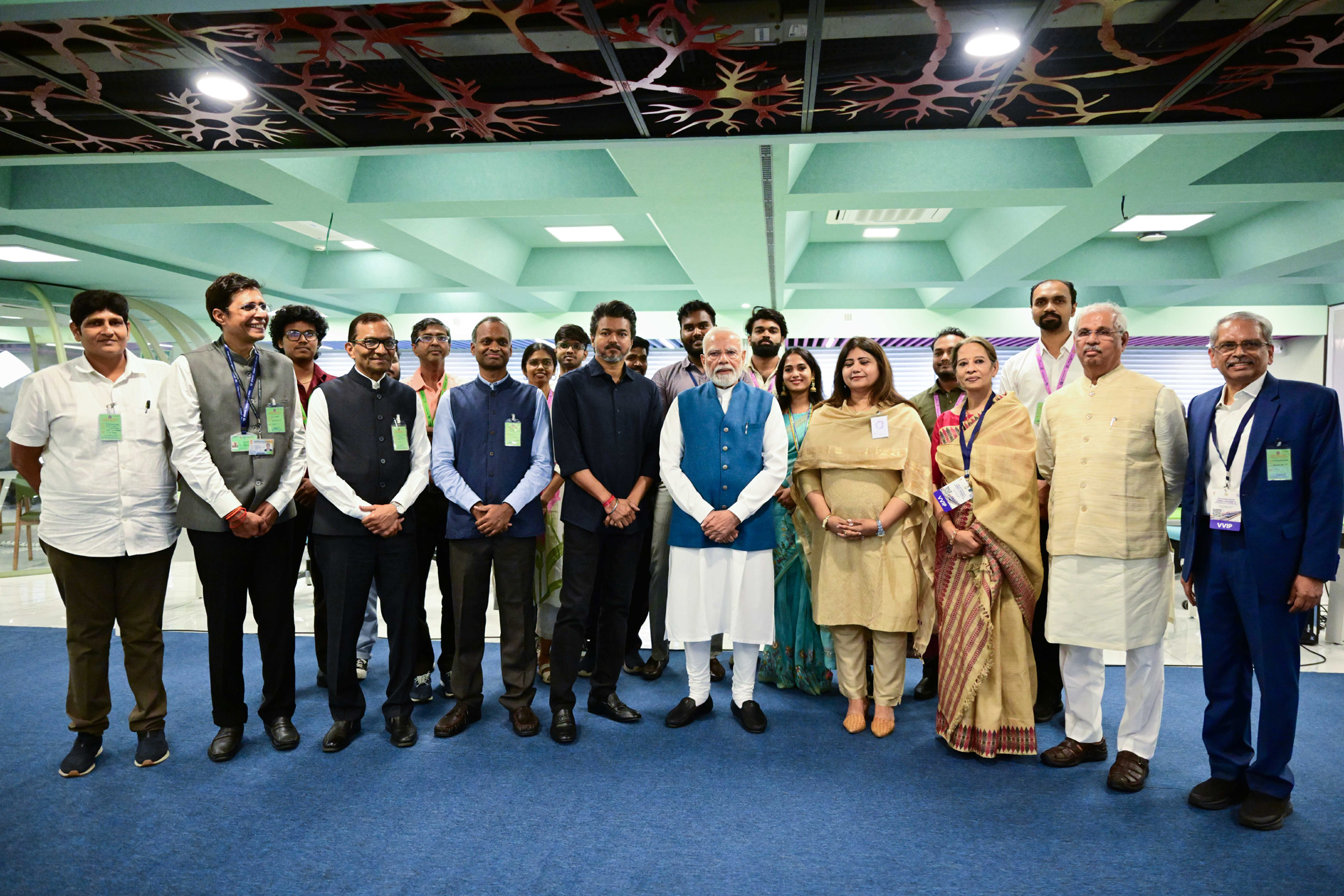
IIT Madras's Sudha Gopalakrishnan Brain Centre has moved from specialist research infrastructure into the wider national technology conversation. Prime Minister Narendra Modi visited the centre in Chennai on October 11, where he was briefed on its work in high-resolution human brain mapping.
The centre's importance lies in the scale and precision of its ambition. It is focused on mapping human brain tissue at cellular and connectivity levels, using advanced imaging and data systems to create detailed brain atlases. Recent reporting from Chennai said the visit included the dedication of the centre to the nation, a mission to map more than 100 human brains at cellular resolution and the release of a specialised atlas of stroke-affected brain tissue.
That sounds technical, but the stakes are practical. Brain disorders, stroke, ageing, developmental conditions and neurodegenerative disease all require better datasets. Medical science cannot improve diagnosis and treatment without seeing the structure it is trying to understand. High-resolution maps can help researchers compare healthy and diseased tissue, test hypotheses and develop better tools for clinicians.
For India, the strategic question is whether public research institutions can build platforms that serve both science and healthcare. IIT Madras has already shown how engineering, computation and life sciences can sit together. A brain-mapping programme pushes that integration further, because the challenge is not only biological. It is also about imaging hardware, data processing, storage, visualisation, annotation and responsible research governance.
The centre's donor-backed origin also says something about how advanced science is being funded. Philanthropy, public institutions and government attention can work together when the research target is long-term and infrastructure-heavy. The hard part is making sure that such centres remain open to serious scientific collaboration rather than becoming ceremonial assets.
There are caution points. Human-brain datasets must be handled with rigorous ethics, consent, anonymisation and access rules. If a research platform produces valuable medical data, the governance around that data becomes as important as the technology itself.
The Chennai visit therefore matters beyond one photo opportunity. It signals that advanced neuroscience is being treated as part of India's technology agenda, alongside AI, semiconductors and digital infrastructure. The real test will be whether the centre can keep producing high-quality datasets, peer-reviewed science and tools that help doctors and researchers long after the launch moment has passed.
Related Stories
C-DOT and IIT (BHU) Open Sixth Telecom Research Centre
A new C-DOT centre at IIT (BHU), Varanasi will focus on 5G Advanced, 6G, AI, quantum technologies and cybersecurity.
Rural Attendance App Update Adds Offline Checks and Stronger Safeguards
The upgraded NMMS app adds liveness checks, device security and offline attendance recording for workers under VB-G RAM G.
India Mobile Congress Build-a-thon Turns 5G Problems Into Agentic AI Prototypes
Teams at India Mobile Congress developed telecom-focused agentic AI prototypes, with policy, security and network troubleshooting built into the challenge.