IIM Lucknow's Family-Business MBA Treats Succession As A Management Skill
The two-year programme, starting in July 2027, is aimed at business owners and next-generation leaders who need governance, succession and growth tools.

IIM Lucknow's new MBA in Family Business is a useful admission that succession is not a soft family matter. It is a management problem, a governance problem and, for many Indian companies, a growth bottleneck.
The institute has launched a two-year MBA programme for business owners and the next generation of family-enterprise leaders. The first batch is scheduled to begin in July 2027, with application deadlines split across two phases ending on December 31, 2026 and April 2, 2027.
The structure is designed around people who are already involved in businesses rather than students stepping away from work completely. The programme is to be delivered in an on-campus modular format, with participants visiting the Noida campus once every month for about seven days.
That format matters because family businesses often cannot pause while the next generation studies. The learning has to return to the enterprise quickly: governance conversations, leadership transition, capital allocation, digital transformation, new ventures and dispute prevention all become live issues, not classroom abstractions.
IIM Lucknow's programme includes six family-business labs across six trimesters. The curriculum covers family enterprise foundations, governance, growth strategy, leadership in family-managed businesses, succession, regulatory frameworks and strategic venture investing. It also includes global immersion options and workshops where parents, siblings and elders can join succession and governance discussions.
The biggest value may be in professionalising uncomfortable conversations. Many founder-led and family-run firms delay succession planning because the topic mixes affection, control, identity and money. A structured academic programme cannot remove that tension, but it can give families a shared vocabulary and external discipline.
For India's economy, this is not a niche education story. Family enterprises employ large numbers of people and control significant local business ecosystems. If the next generation can modernise governance without breaking founder trust, the effect could show up in better continuity, cleaner expansion decisions and stronger regional firms.
Related Stories
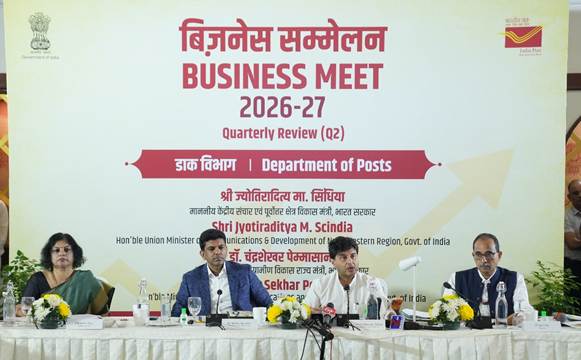
India Post Clears ₹4,000 Crore in a Quarter for the Second Time
India Post reported first-half revenue of ₹8,212.7 crore, with parcel income up 71% year on year in the July–September quarter.

Fusion CX IPO Puts Kolkata's AI-Enabled Service Firm On The Market Clock
The Rs 702 crore issue opens on October 14 with a Rs 275-289 price band and a fresh-issue component aimed partly at reducing debt.

GST Process Reforms Put Working Capital At The Centre
Faster refund acknowledgement, higher prosecution thresholds and simpler registration rules could ease compliance pressure if field implementation follows the Council's trust-based intent.