Sagarmala Blue Bond Puts India's Maritime Finance Market On September 28 Watch
India's debt market has a new test today as Sagarmala Finance Corporation prepares the country's first blue bond issue. The state-backed maritime lender is...
India's debt market has a new test today as Sagarmala Finance Corporation prepares the country's first blue bond issue. The state-backed maritime lender is seeking to raise Rs 600 crore, including a Rs 500 crore greenshoe option, through 10-year bonds. The issue is designed to fund maritime sector lending, greenfield port projects, coastal road networks and related blue-economy infrastructure. It is a finance story, but it also sits inside India's long-running effort to build port capacity and coastal connectivity.
Blue bonds are debt instruments linked to ocean, water and marine-sector projects. They are often discussed alongside green bonds, but the use of proceeds is narrower: ports, clean water, sustainable fisheries, shipping systems, ocean energy, recycling and coastal resilience can all fit the frame if governance is clear. The Indian issue is important because it gives domestic investors a first local benchmark for this category rather than treating blue finance as an overseas development-bank idea.
Sagarmala Finance Corporation's managing director L V S Sudhakar Babu has said the proceeds are expected to be used within the current financial year. SBI Capital Markets is arranging the issue, and the bonds have been rated AA+ by Icra and Care. Those details matter because sustainable finance labels carry weight only when the underlying instrument can stand up to ordinary credit scrutiny as well as environmental claims.
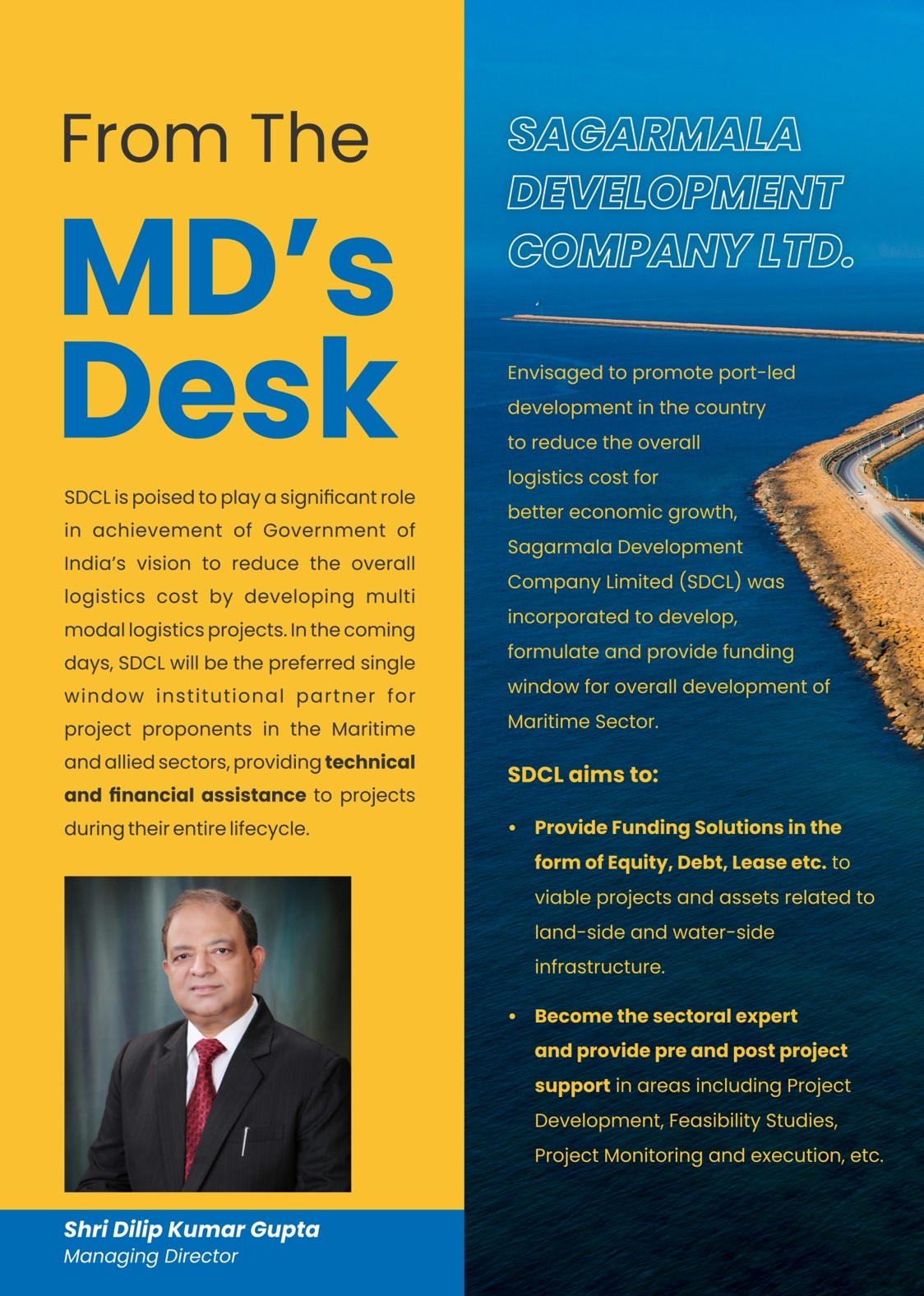
The company itself is relatively new in its present form. It is India's first maritime-focused non-banking finance company and works under the wider Sagarmala programme connected to ports, shipping and waterways. Its mandate includes lending into projects where repayment periods can be long, such as ports, shipbuilding, inland waterways and last-mile connectivity. A 10-year bond better matches that kind of asset base than very short borrowing would.
Investor demand will be watched closely. Large insurance and provident fund players have reportedly been approached, which makes sense because long-tenor infrastructure paper often needs patient institutional capital. If the bond is received well, it could encourage other public bodies and municipal issuers to frame water and coastal projects more clearly for the debt market. Vadodara Municipal Corporation is also reported to be considering a blue bond, suggesting the idea may not stay limited to national maritime finance.
The risk is that the blue label becomes decorative unless project selection, reporting and impact tracking are clear. Investors will need to know which projects receive the money, how proceeds are ring-fenced, and whether outcomes are reported in a way that is more than marketing. India has already seen green-bond growth; the maritime version now has to prove that it can finance real infrastructure without blurring the line between ordinary capital expenditure and measurable blue-economy benefits.
For ports, coastal roads and shipping-linked industry, the launch is a signal that capital-market language is catching up with infrastructure demand. For investors, it is an early chance to price India's blue-finance risk. Today's issue will not solve maritime funding needs by itself, but it can set the terms for what credible blue borrowing should look like in India.
Related Stories

India Post Clears ₹4,000 Crore in a Quarter for the Second Time
India Post reported first-half revenue of ₹8,212.7 crore, with parcel income up 71% year on year in the July–September quarter.

IIM Lucknow's Family-Business MBA Treats Succession As A Management Skill
The two-year programme, starting in July 2027, is aimed at business owners and next-generation leaders who need governance, succession and growth tools.

Fusion CX IPO Puts Kolkata's AI-Enabled Service Firm On The Market Clock
The Rs 702 crore issue opens on October 14 with a Rs 275-289 price band and a fresh-issue component aimed partly at reducing debt.