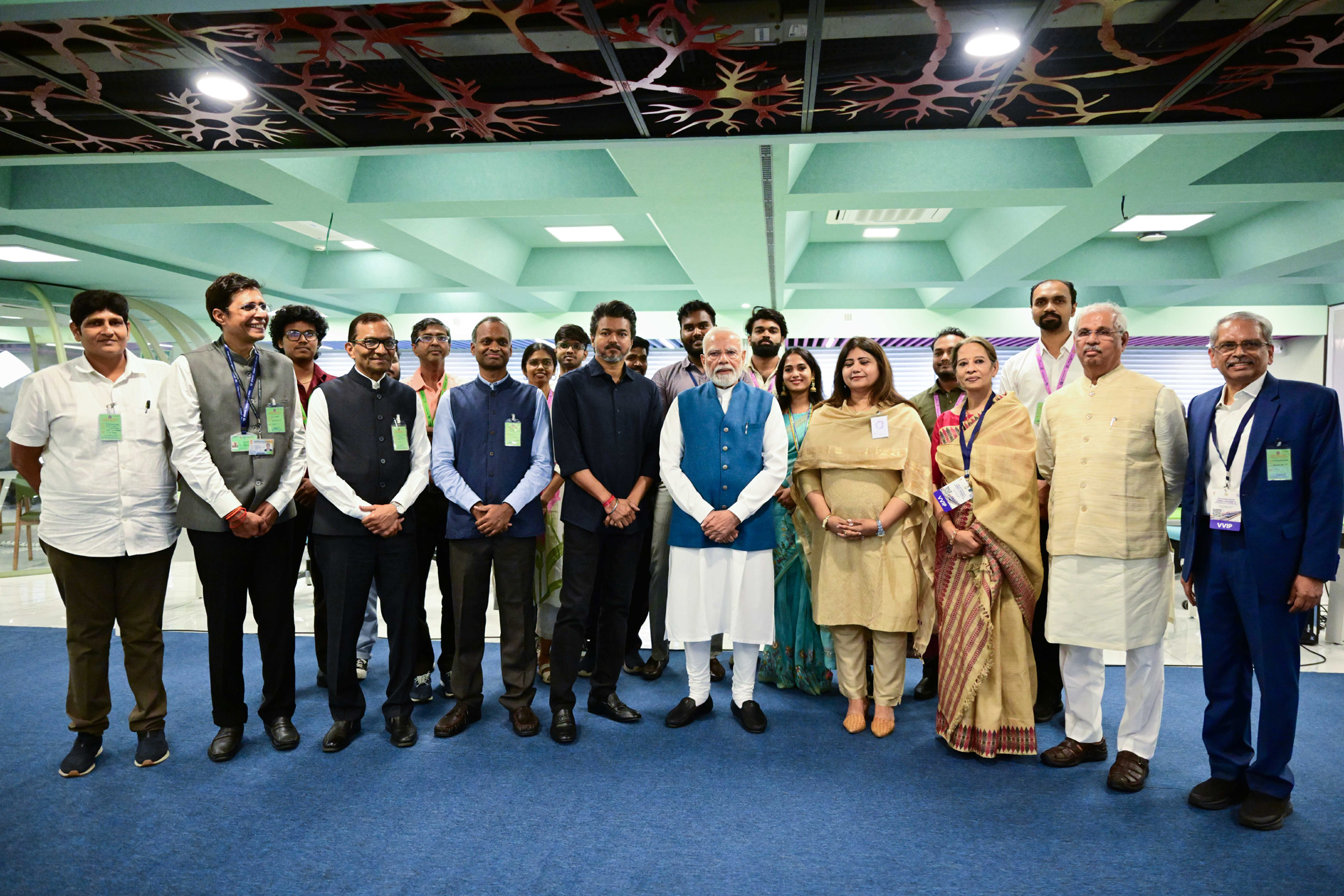
Sarvam Co-Founder Pratyush Kumar Says India Needs Its Own AI Defence Layer
Sarvam co-founder Pratyush Kumar has pushed India's artificial intelligence debate into security territory, warning that increasingly capable systems can be...

Sarvam co-founder Pratyush Kumar has pushed India's artificial intelligence debate into security territory, warning that increasingly capable systems can be misused by rogue actors if the country does not build its own defensive capacity. Speaking at a media conclave on Saturday, Kumar argued that India should accelerate AI development while taking cybersecurity, regulation and national-interest risks more seriously. The comments make this more than a startup-founder sound bite; they connect India's AI ambitions to a new class of public-safety and defence questions.
Sarvam has become one of the country's most visible AI companies because it is working on Indian-language and sovereign model infrastructure. Kumar co-founded the company with Vivek Raghavan after earlier work linked to AI4Bharat and Indian-language AI systems. The founder context matters because the warning is coming from someone building inside the sector, not from an outside critic asking India to slow down.
Kumar's core argument is that AI capability and AI protection now have to grow together. Powerful models can help government services, local-language access, coding, education, productivity and enterprise automation. The same tools can also support fraud, cyberattacks, misinformation, impersonation, automated vulnerability discovery and social engineering. That is why he framed the issue as a need for a defence layer rather than a reason to step away from AI adoption.
The timing is important because the government is developing AI safety and governance structures under the IndiaAI Mission. The emerging policy framework has included ideas such as an AI Governance Group, expert committees and an AI Safety Institute. The Safe and Trusted AI pillar covers issues such as machine unlearning, bias mitigation, privacy-preserving technologies, explainability and risk assessment. Those themes can sound technical, but Kumar's intervention makes the everyday point clearer: India needs the ability to understand, test and defend against systems that may be used against its citizens, companies and public infrastructure.
For startups, the message cuts both ways. Founders want faster model access, stronger compute, clearer procurement and more room to build Indian products. But cybersecurity cannot be treated as a compliance afterthought if AI agents begin touching codebases, financial workflows, identity systems, customer support, health records or government services. A weakly secured AI layer can turn a productivity tool into an attack surface.
India also has a language and scale challenge. Defences built only around English-language prompts or Western threat patterns may miss how misuse works across Indian languages, scripts, dialects and local social contexts. Sarvam's own focus on Indian use cases gives Kumar's warning extra weight: sovereign AI is not just about who owns a model, but whether the country can secure the model ecosystem around its own users.
The practical test now is whether policy, industry and research institutions can move together. India does not need to choose between building AI and regulating AI. Kumar's point is that doing only one is risky. The country has to expand capability, build trusted evaluation systems, train cybersecurity talent and create institutions that can respond when AI tools are used maliciously.
Related Stories
C-DOT and IIT (BHU) Open Sixth Telecom Research Centre
A new C-DOT centre at IIT (BHU), Varanasi will focus on 5G Advanced, 6G, AI, quantum technologies and cybersecurity.
Rural Attendance App Update Adds Offline Checks and Stronger Safeguards
The upgraded NMMS app adds liveness checks, device security and offline attendance recording for workers under VB-G RAM G.
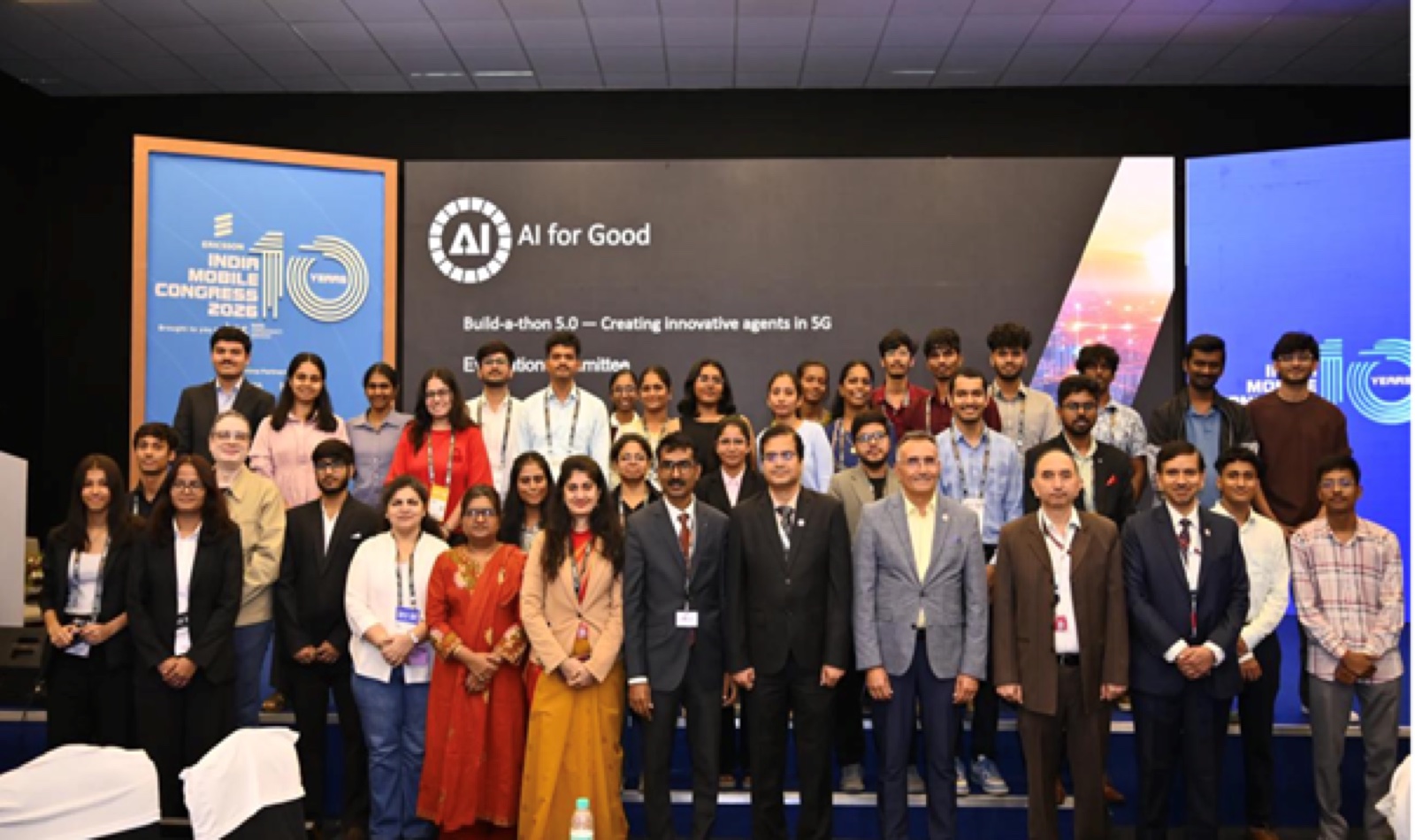
India Mobile Congress Build-a-thon Turns 5G Problems Into Agentic AI Prototypes
Teams at India Mobile Congress developed telecom-focused agentic AI prototypes, with policy, security and network troubleshooting built into the challenge.