FSSAI Sends Notices To 15 Food Brands Over Misleading Product Claims
India's food regulator issues notices to 15 food brands over alleged misleading product claims, putting front-of-pack marketing and consumer trust back in the spotlight.

India's food regulator has put misleading product claims back in the public spotlight after issuing notices to 15 food brands. The Food Safety and Standards Authority of India acted over alleged violations involving brand names, trade names and product claims that could mislead customers. The reported list included large and visible names as well as newer health-focused labels, showing that the enforcement question is not limited to one corner of the market.
The timing matters because Indian shoppers are surrounded by stronger and more complex food claims than ever before. Packaged foods now compete on words such as healthy, natural, protein, millet, immunity, vegan, baked, cold-pressed, sugar-free and gut-friendly. Some of those claims can be legitimate when they are clear, measurable and supported by the product's actual composition. Others can create a health halo that encourages consumers to see a processed product as better than it really is.
FSSAI's action is a reminder that food safety is not only about contamination, expired stock or unsafe kitchens. It is also about information. A label can shape a family's purchasing decision as strongly as price or taste. If a product name or front-of-pack claim exaggerates a benefit, hides a trade-off or implies a medical advantage without basis, consumers lose the ability to compare properly.
The issue is especially important in India's fast-changing food economy. Quick-commerce apps, online grocery platforms and health-food start-ups have made product discovery faster. A parent buying snacks, a student ordering protein foods or an office worker choosing a low-sugar drink may make the decision in seconds on a phone screen.
For companies, the notices should be read as a warning to review marketing language before regulators force changes. The safest approach is to make claims specific. If a product is high in protein, the quantity should be easy to verify. If it is low in sugar, the basis for comparison should be clear.
For consumers, the practical response is to slow down the purchase. Read the nutrition panel, check serving size, compare sugar, salt and fat levels, and treat bold front-label promises as advertising unless they are backed by specifics. In a crowded food market, honest labels are becoming as important as safe ingredients.
Related Stories
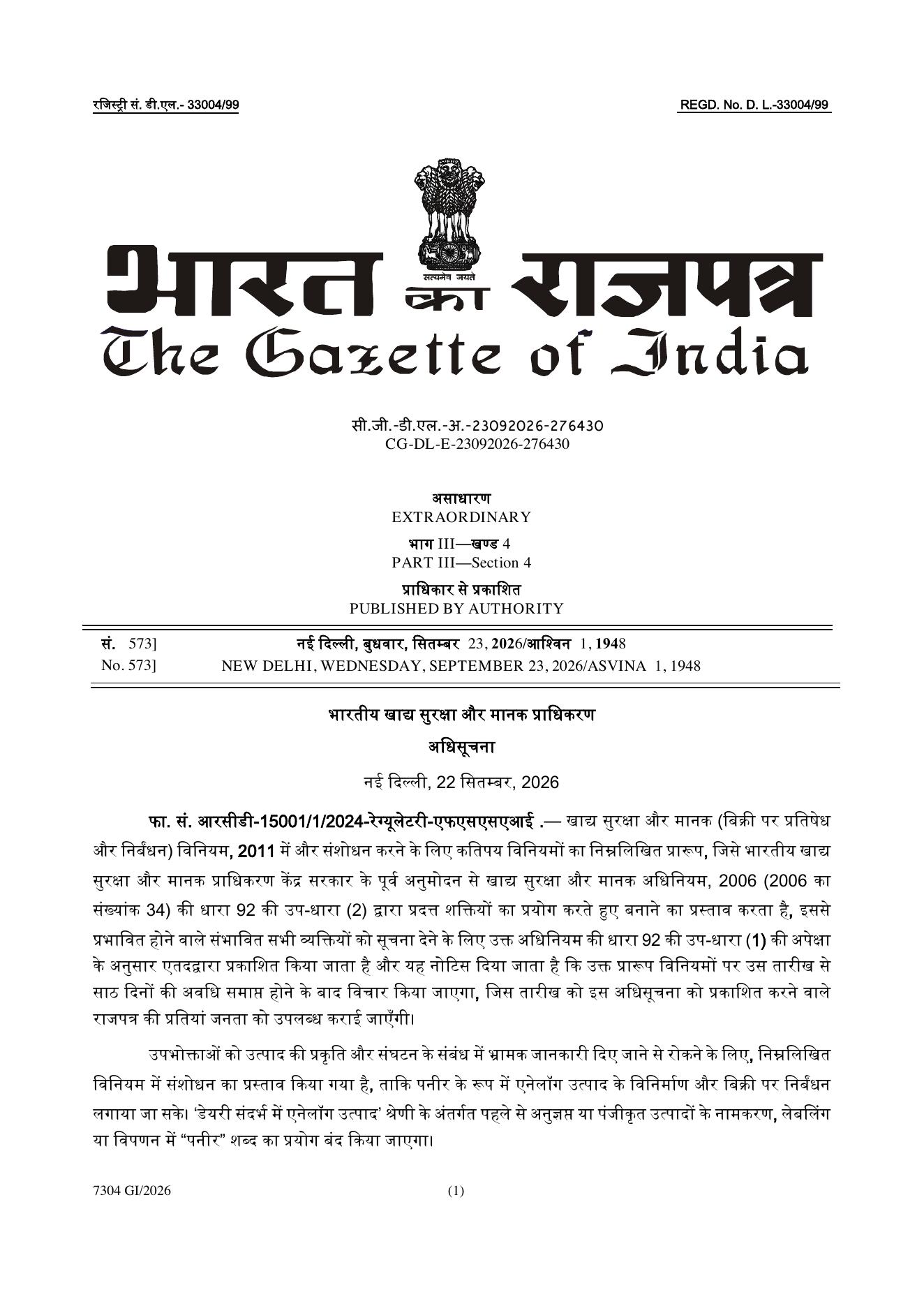
FSSAI Draft Paneer Rule Targets Misleading Non-Milk Dairy Analogue Labels
The Food Safety and Standards Authority of India has proposed a draft amendment to prevent non-milk analogue products from being represented as paneer, a...

Dabur Begins Label Changes After FSSAI Stops Misleading 100 Percent Food Claims
Dabur has begun changing product labels after the Food Safety and Standards Authority of India told the company to stop selling food products carrying...

PepsiCo India Drops Energy Label From Sting After FSSAI Category Order
PepsiCo India has started removing the word "energy" from new Sting cans and bottles after the Food Safety and Standards Authority of India moved against the...
