Bharti's Rajan Mittal Says Overlooking India Means Missing Defining Growth Story
Bharti Enterprises Vice Chairman Rajan Bharti Mittal has used a fresh public intervention to argue that global investors risk missing one of the world's defining growth stories if they overlook India.
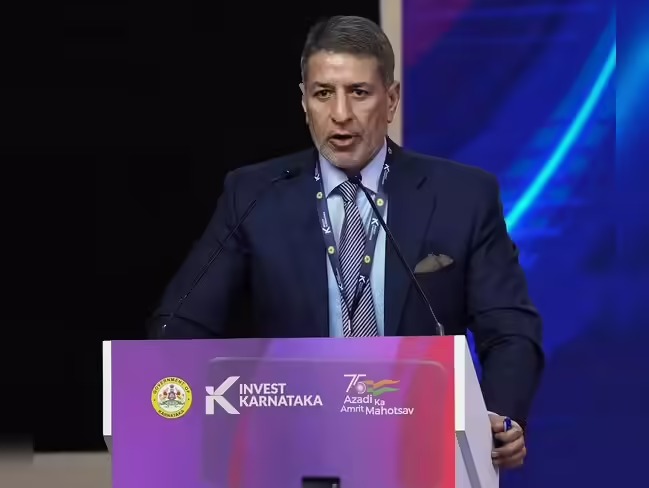
Bharti Enterprises Vice Chairman Rajan Bharti Mittal has used a fresh public intervention to argue that global investors risk missing one of the world's defining growth stories if they overlook India. Mittal believes India stands out as a rare bright spot of growth and stability as the global order is reshaped. His comments land in the wider context of India's economic positioning at a time when companies and investors are reassessing supply chains, consumer markets, technology investment and geopolitical exposure.
This is a founder-led business story because Bharti remains one of the clearest examples of Indian entrepreneurship scaling into a national and global platform. Sunil Bharti Mittal built Bharti from a small manufacturing start into a telecom and digital-services group, while Rajan Mittal has been one of the senior leaders associated with the group's expansion and public policy voice. When a Bharti leader argues that India is being underestimated, the point is not abstract. The group has lived through liberalisation, telecom competition, regulatory battles, capital cycles and the shift from voice connectivity to data-led digital infrastructure.
The argument for India rests on several visible pillars. The country has a large domestic market, a young workforce, deepening digital rails, improving manufacturing ambitions, stronger formalisation and rising strategic importance for global companies seeking alternatives or complements to China. India is also trying to present itself as a base for electronics, telecom equipment, cloud services, defence production, green energy and consumer platforms. Those strengths do not eliminate risk, but they explain why business leaders keep framing India as a long-term allocation rather than a short-term trade.
Mittal's warning also lands at a time when global capital is cautious. Interest-rate cycles, conflict risks, supply-chain shocks and uneven demand have made investors more selective. In that environment, India can benefit from being seen as relatively stable, but it still has to compete for capital. Investors compare regulation, contract enforcement, infrastructure, tax predictability, labour availability, logistics and market access. Optimism has to be backed by execution.
The Bharti lens is useful because connectivity sits beneath many of India's growth claims. Digital payments, ecommerce, online education, health platforms, enterprise software, AI adoption and rural market access all depend on reliable networks and affordable data. India's telecom story has already changed daily life. The next question is whether the same infrastructure can support higher-value economic activity: manufacturing integration, cloud workloads, industrial automation, secure communications and broader digital exports.
There are reasons to be careful. India still faces uneven state capacity, court delays, urban congestion, skills gaps, rural income pressure and regulatory unpredictability in some sectors. A large market can attract capital, but it can also disappoint if companies mistake population for purchasing power or underestimate local competition. The strongest India thesis is therefore not that growth is automatic. It is that the opportunity is large enough to reward serious, patient and locally informed investment.
Mittal's message is ultimately a challenge to both sides. Global investors should not treat India as a peripheral market. Indian policymakers and companies should not assume attention will remain if execution slips. If India wants to be the defining growth story, it has to keep making the story investable.
Related Stories
India Post Clears ₹4,000 Crore in a Quarter for the Second Time
India Post reported first-half revenue of ₹8,212.7 crore, with parcel income up 71% year on year in the July–September quarter.

IIM Lucknow's Family-Business MBA Treats Succession As A Management Skill
The two-year programme, starting in July 2027, is aimed at business owners and next-generation leaders who need governance, succession and growth tools.

Fusion CX IPO Puts Kolkata's AI-Enabled Service Firm On The Market Clock
The Rs 702 crore issue opens on October 14 with a Rs 275-289 price band and a fresh-issue component aimed partly at reducing debt.