Dabur Begins Label Changes After FSSAI Stops Misleading 100 Percent Food Claims
Dabur has begun changing product labels after the Food Safety and Standards Authority of India told the company to stop selling food products carrying...

Dabur has begun changing product labels after the Food Safety and Standards Authority of India told the company to stop selling food products carrying allegedly misleading 100 percent claims. Economic Times reported that the products included honey, coconut water and apple cider vinegar, and that Dabur said the business impact was limited to the affected products while it sought legal advice. Times of India also reported the regulator's action, framing it as a wider warning about purity and naturalness claims in India's food market.
The issue sits at the intersection of food safety, advertising and consumer trust. Economic Times reported that FSSAI directed Dabur to immediately suspend the sale of several food products carrying claims such as 100 percent Natural, 100 percent Pure, 100 percent Purity Guaranteed, 100 percent Organic and 100 percent Tender Coconut Water. The regulator said such claims were ambiguous, unverifiable and likely to mislead consumers under the Food Safety and Standards Advertising and Claims Regulations, 2018.
Dabur's response was not an admission that its products were unsafe. Economic Times reported that the company said declarations on its product labels comply with the prevailing legal and regulatory framework and are consistent with long-standing industry practice. Dabur said it stands by the purity and quality of its products and has never made misleading claims. At the same time, it said it had already initiated the transition of product labels and was seeking legal advice on the future course of action.
The distinction matters for readers. A labelling dispute is not the same as a finding that every affected product is harmful or adulterated. The regulator's objection is about how claims are presented to consumers and whether they can be verified. In food aisles, words such as pure, natural and organic carry strong emotional weight. They can influence shoppers who are worried about additives, processing, sugar, contamination or authenticity. If those words are too broad or unsupported, they can tilt purchasing decisions without giving consumers measurable information.
Economic Times reported that FSSAI also alleged that Dabur Himalayan Organic Apple Cider Vinegar and Dabur Organic Honey displayed the Jaivik Bharat logo without valid FSSAI organic endorsement, in violation of organic-food regulations. That adds another layer because organic symbols are not mere marketing flourishes. They are meant to connect products to certification systems. If regulators believe a logo is used without proper endorsement, the issue becomes both a consumer claim and a certification-integrity concern.
For India's packaged-food companies, the case is a signal to review label language before enforcement escalates. Long-used claims may no longer pass scrutiny if they are not precise, evidence-backed and aligned with current regulations. Companies may need to rewrite labels, adjust digital listings, train sales teams and coordinate with distributors so products in warehouses and retail channels do not carry disputed claims. That can be operationally messy even when the financial impact is limited.
For consumers, the lesson is to read food labels more critically. A strong claim on the front of a pack should be backed by ingredient lists, nutrition panels, certification marks and clear explanations. FSSAI's action against Dabur shows that regulators are paying closer attention to broad purity language, not only to contamination or expiry issues. The public outcome to watch is whether the case leads to clearer labels across the sector, or simply a narrow change to the products named in this order.
Related Stories
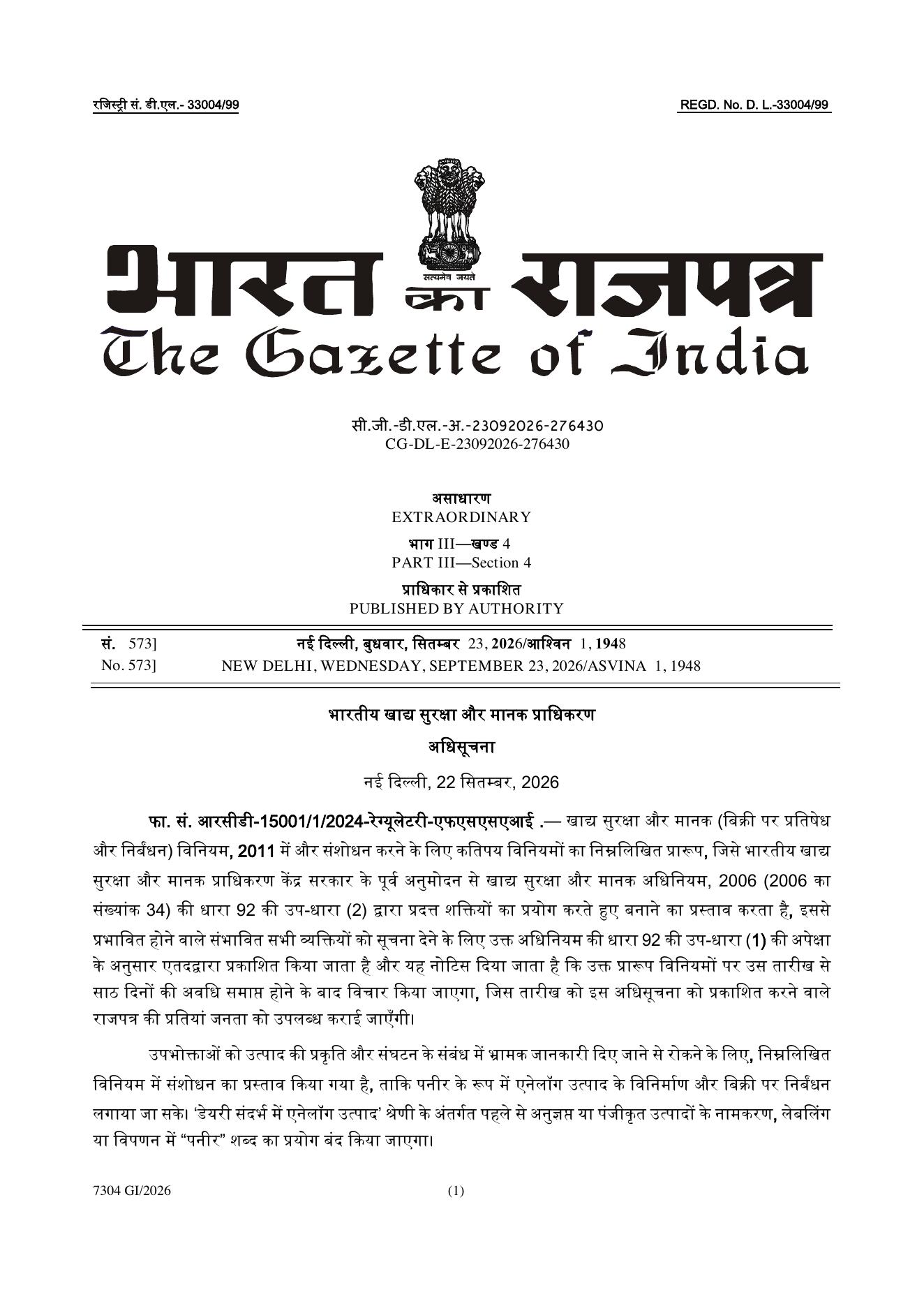
FSSAI Draft Paneer Rule Targets Misleading Non-Milk Dairy Analogue Labels
The Food Safety and Standards Authority of India has proposed a draft amendment to prevent non-milk analogue products from being represented as paneer, a...

PepsiCo India Drops Energy Label From Sting After FSSAI Category Order
PepsiCo India has started removing the word "energy" from new Sting cans and bottles after the Food Safety and Standards Authority of India moved against the...

FSSAI Names United Spirits And INBREW In Alcohol Flavour Labelling Crackdown
India's food regulator has put alcoholic beverage makers on notice, with the Food Safety and Standards Authority of India initiating enforcement action over alleged flavouring and...
