FSSAI Draft Paneer Rule Targets Misleading Non-Milk Dairy Analogue Labels
The Food Safety and Standards Authority of India has proposed a draft amendment to prevent non-milk analogue products from being represented as paneer, a...
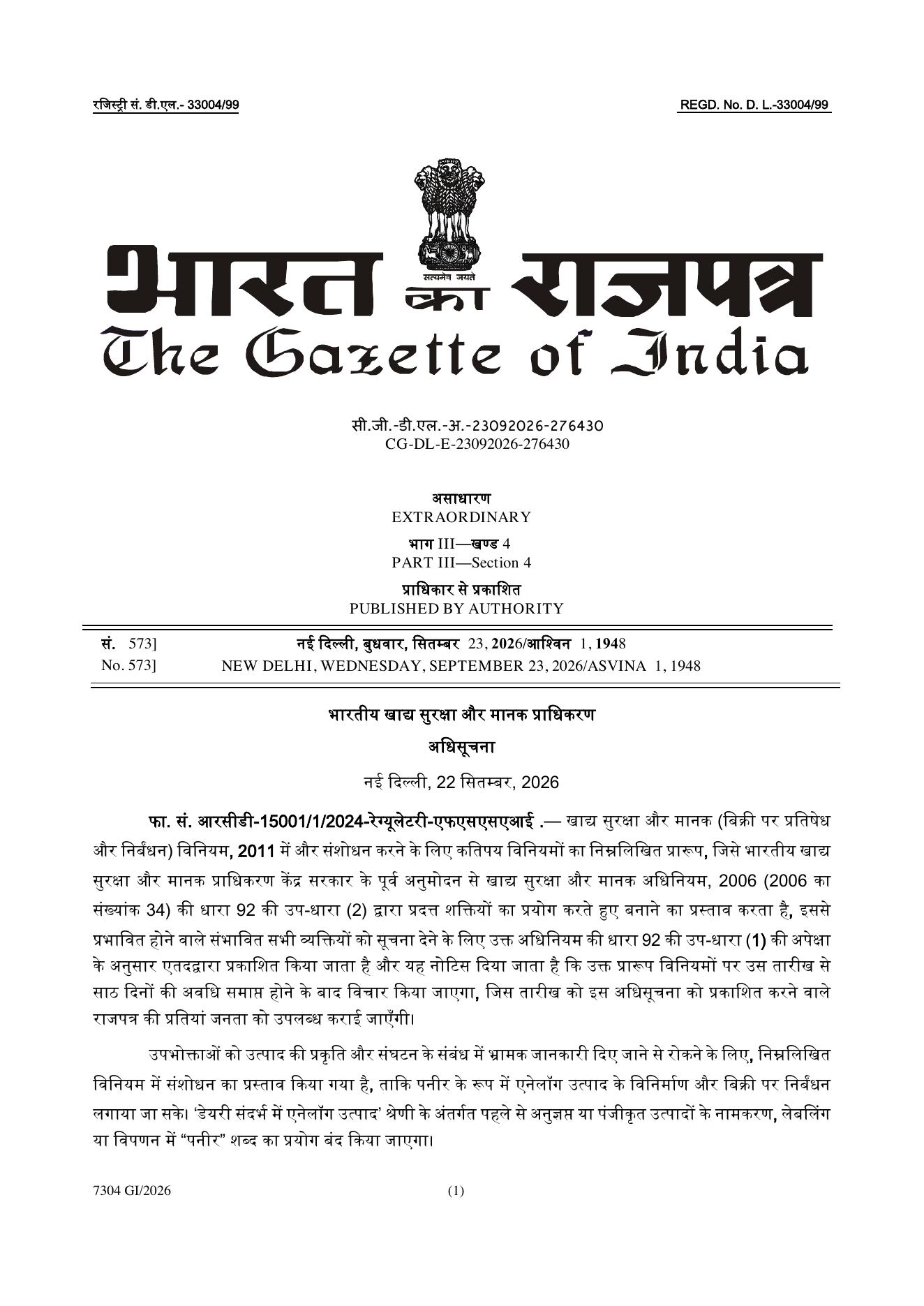
The Food Safety and Standards Authority of India has proposed a draft amendment to prevent non-milk analogue products from being represented as paneer, a move aimed at tightening food labelling and protecting consumers from misleading dairy claims. The proposal, announced by the Ministry of Health and Family Welfare on September 24, would amend the Food Safety and Standards (Prohibition and Restrictions on Sales) Regulations, 2011.
The proposed clause specifically addresses "paneer made of constituents not derived from milk." In plain terms, products already licensed or registered under an analogue dairy category would have to stop using the word paneer in their name, label or marketing if they are not milk-derived. The proposal does not mean the consultation process is finished. Because it is a draft regulation, FSSAI has invited objections and suggestions, and the draft will be considered after 60 days from the date the Gazette copies are made available to the public.
The issue has become more visible because consumers often use paneer as a shorthand for a dairy product with a familiar nutrition and ingredient profile. If a product is made from non-milk constituents but is sold with the same word, shoppers may not understand what they are buying unless the labelling is clear. FSSAI's proposal is therefore about both food standards and consumer language.
The rule would matter for manufacturers, retailers, restaurants, cloud kitchens and packaged-food brands. Businesses selling analogue products would need to review product names, pack artwork, digital listings, menu descriptions, advertising claims and distributor material. The cost is not only a label redesign. It may involve explaining the product category differently and making sure sales teams do not use the restricted term casually.
For consumers, the proposal could make supermarket and online choices clearer. It would not stop all alternative products from existing, but it would require them to be presented in a way that reflects their composition. That distinction is important because India has room for both dairy products and alternative-format foods, provided shoppers are not led to believe they are the same thing.
The draft also fits a wider food-safety pattern. FSSAI has been under pressure to act more visibly on misleading claims, food testing failures and the difference between marketing language and actual product standards. Paneer is especially sensitive because it is widely consumed at home and in restaurants, and because adulteration or substitution concerns travel quickly through social media.
Stakeholders now have a consultation window to respond. Food businesses should not wait for enforcement to begin before mapping affected products. The likely direction is clear: if a product is not milk-derived paneer, the label should not rely on the word paneer to sell it.
Related Stories

Dabur Begins Label Changes After FSSAI Stops Misleading 100 Percent Food Claims
Dabur has begun changing product labels after the Food Safety and Standards Authority of India told the company to stop selling food products carrying...

PepsiCo India Drops Energy Label From Sting After FSSAI Category Order
PepsiCo India has started removing the word "energy" from new Sting cans and bottles after the Food Safety and Standards Authority of India moved against the...

FSSAI Names United Spirits And INBREW In Alcohol Flavour Labelling Crackdown
India's food regulator has put alcoholic beverage makers on notice, with the Food Safety and Standards Authority of India initiating enforcement action over alleged flavouring and...
