FSSAI Names United Spirits And INBREW In Alcohol Flavour Labelling Crackdown
India's food regulator has put alcoholic beverage makers on notice, with the Food Safety and Standards Authority of India initiating enforcement action over alleged flavouring and...

India's food regulator has put alcoholic beverage makers on notice, with the Food Safety and Standards Authority of India initiating enforcement action over alleged flavouring and labelling violations in well-known rum and whisky products. Reports named United Spirits and INBREW Beverages among companies facing scrutiny, with brands such as Old Monk, McDowell's, Bagpiper, Antiquity Blue and Royal Challenge cited in coverage of the action. The core issue is whether companies used added or synthetic flavours in ways that conflict with food standards, or presented product characteristics in a manner that could mislead consumers.
The case matters because alcohol regulation often sits across multiple layers: state excise controls, food-safety rules, labelling norms, advertising restrictions and consumer-protection expectations. A bottle label is not just marketing copy. It is the consumer's main source of information about category, age claims, flavour character, ingredients and regulatory compliance. If a product suggests a natural character or aged profile while relying on flavour additives in a way that rules do not permit, regulators can treat that as more than a technical wording problem.
For producers, the immediate risk is legal and reputational. Notices or enforcement action can require explanations, label changes, product clarification, distribution adjustments or other compliance steps. Large beverage companies are experienced in navigating excise and labelling systems, but the public naming of brands raises the stakes. Retailers and distributors may also seek clarity because alcohol inventory moves through state-specific channels and licences. Any uncertainty around compliant labelling can complicate supply decisions, even before a final regulatory outcome is reached.
For consumers, the issue is simpler: people should be able to understand what they are buying. Flavoured alcohol is not automatically a problem, and many categories around the world openly use flavouring as part of the product proposition. The concern arises when the flavouring is not permitted for that category, is not properly disclosed, or creates a misleading impression about how the drink was made. That is why FSSAI's action sits at the intersection of food law and consumer trust. In a market where premium cues and legacy brand names influence purchase decisions, accurate labels matter.
The action may also influence how companies launch new variants. India's alcohol market has been experimenting with flavours, younger brand positioning and premium cues, but innovation has to fit the product standard. If a label uses language that sounds traditional while the formula depends on a prohibited or undisclosed additive, the risk grows. Compliance teams will likely review artwork, claims and ingredient records more closely before products move across state markets. That may slow some launches, but it can also make the category cleaner for brands that already invest in transparent formulation and conservative label approval.
The enforcement also sends a broader signal to India's packaged food and beverage industry. Regulators have become more willing to challenge health claims, ingredient claims and product descriptions that overreach. Alcohol producers may now need to revisit not only individual disputed labels but their wider internal approval systems: formula review, legal sign-off, supplier declarations, design copy and state-level registrations. The practical outcome will depend on the companies' responses and the regulator's final findings. But the message is already clear enough: familiar brands do not get a free pass when flavour and label claims fall under food-safety rules.
Related Stories
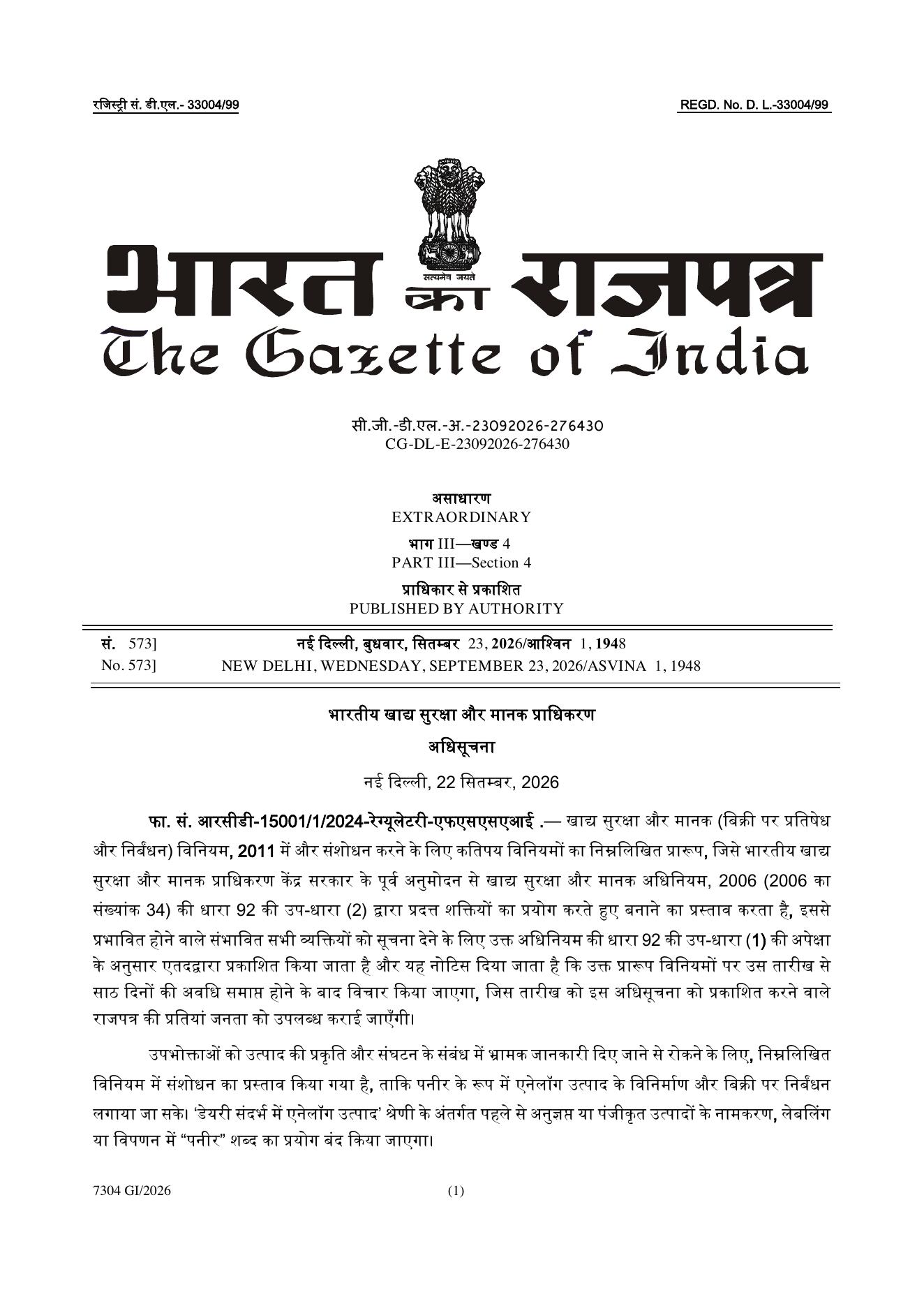
FSSAI Draft Paneer Rule Targets Misleading Non-Milk Dairy Analogue Labels
The Food Safety and Standards Authority of India has proposed a draft amendment to prevent non-milk analogue products from being represented as paneer, a...

Dabur Begins Label Changes After FSSAI Stops Misleading 100 Percent Food Claims
Dabur has begun changing product labels after the Food Safety and Standards Authority of India told the company to stop selling food products carrying...

PepsiCo India Drops Energy Label From Sting After FSSAI Category Order
PepsiCo India has started removing the word "energy" from new Sting cans and bottles after the Food Safety and Standards Authority of India moved against the...
