FSSAI Recalls Wonderland Raisins And Suspends Dior Pharmaceuticals Unit In Food Safety Crackdown
India's food regulator has launched a fresh enforcement push against food business operators, ordering a recall of Wonderland Raisins, suspending a nutraceutical manufacturing licence and prohibiting.

India's food regulator has launched a fresh enforcement push against food business operators, ordering a recall of Wonderland Raisins, suspending a nutraceutical manufacturing licence and prohibiting the sale of a health supplement over serious compliance concerns. The Food Safety and Standards Authority of India directed M/s Sun Organic Industries Pvt Ltd to recall a batch of Wonderland Raisins after regulatory testing found pesticide residues above prescribed limits. According to the report, samples tested at the National Food Laboratory in Ghaziabad and the Referral Laboratory at NIFTEM-K were declared unsafe under the Food Safety and Standards Act, 2006.
The recall is significant because raisins sit in a category many households view as a routine snack rather than a high-risk food. Dried fruit is used in homes, school lunch boxes, bakeries and packaged products, so a pesticide-residue finding has a wider consumer trust effect. FSSAI has asked the company to recall the entire batch from the market and submit periodic status reports. That follow-up requirement matters. Food recalls protect consumers only when the product is actually removed from shelves, supply chains and online listings, not simply when an order is issued.
FSSAI also suspended the licence of Dior Pharmaceuticals' Nutraceutical Manufacturing Unit with immediate effect after an inspection found major and critical non-compliances. The reported deficiencies included quality management and manufacturing-practice concerns. In a third action, the regulator issued a prohibition order against M/s Vatave Health Care, banning manufacture, storage, distribution and sale of Folineuro Syrup, a folinic acid syrup. The regulator said the product was marketed as a nutritional food supplement with misleading brain-function claims and did not comply with the relevant health supplement and nutraceutical regulations.
The broader enforcement climate is becoming tougher. Separate reports on Saturday said FSSAI suspended the licence of Kolkata bakery company Switz Foods over alleged unhygienic manufacturing and pest infestation. Karnataka authorities have also moved against high-fat, sugar and salt foods near schools and colleges, applying restrictions on campuses and within a 50-metre radius. These are different actions by different authorities, but together they show that food safety is moving from periodic inspection news to a daily consumer issue touching snacks, supplements, bakeries and school food environments.
For businesses, the message is that paperwork alone will not be enough. Regulators are looking at test results, hygiene, manufacturing systems, labelling and claims. For consumers, the practical step is to check recall notices, avoid products named in enforcement orders and be cautious of supplements that promise medical or cognitive benefits without clear approval. India's food economy is large, diverse and fast-moving. Stronger enforcement can build trust, but only if actions are transparent, proportionate and followed through until unsafe products are out of circulation.
Retailers and marketplaces are part of the enforcement chain as well. When a recall is ordered, supermarkets, distributors, quick-commerce platforms and pharmacy-style sellers need fast internal alerts so named products do not keep moving through inventory systems. The same applies to supplements with prohibited claims, because consumers often discover them through online search and influencer-style promotion rather than traditional shelves. Strong regulation will therefore require both factory inspection and digital-market surveillance. The current actions show the regulator is willing to name products and operators, but the recall's effectiveness will depend on removal at every point of sale.
Related Stories
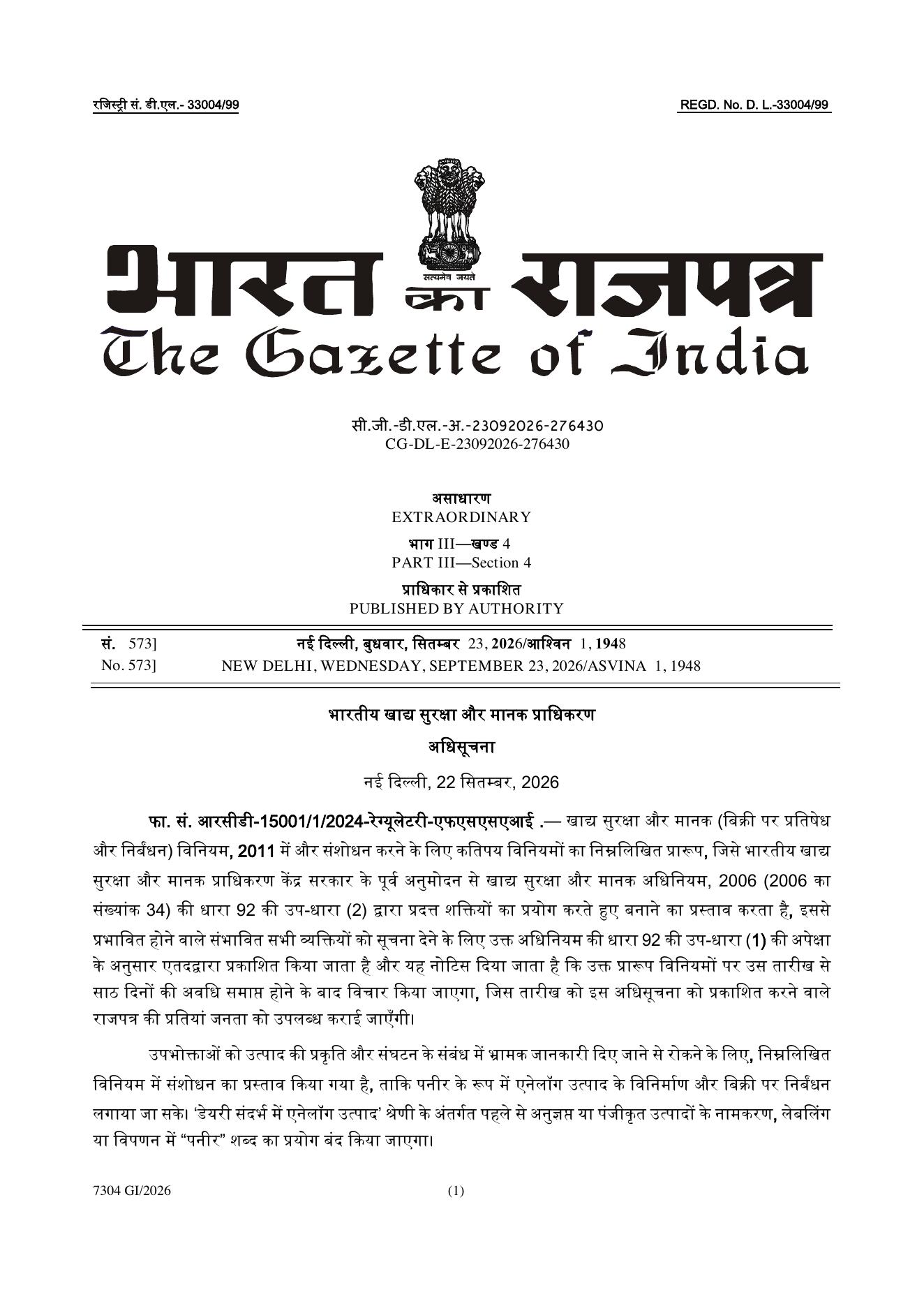
FSSAI Draft Paneer Rule Targets Misleading Non-Milk Dairy Analogue Labels
The Food Safety and Standards Authority of India has proposed a draft amendment to prevent non-milk analogue products from being represented as paneer, a...

Dabur Begins Label Changes After FSSAI Stops Misleading 100 Percent Food Claims
Dabur has begun changing product labels after the Food Safety and Standards Authority of India told the company to stop selling food products carrying...

PepsiCo India Drops Energy Label From Sting After FSSAI Category Order
PepsiCo India has started removing the word "energy" from new Sting cans and bottles after the Food Safety and Standards Authority of India moved against the...
