FSSAI Names Airport Licensing Officer As Food Safety Oversight Moves Through Travel Hubs
The Food Safety and Standards Authority of India has listed a July 27 order appointing a Designated Officer for central licensing for airports under Section 36 of the Food Safety and Standards Act, 2006.

The Food Safety and Standards Authority of India has listed a July 27 order appointing a Designated Officer for central licensing for airports under Section 36 of the Food Safety and Standards Act, 2006. The development was selected for today because it is recent, source-verifiable and relevant to The Indian Daily Post audience across India and the diaspora.
The verified facts are clear. The advisory appears as the latest item on FSSAI official advisories page. The linked office order is dated July 24 and concerns airport central licensing. Airport food operations can include packaged snacks, coffee shops, restaurants, lounges, airline catering interfaces, vending points and quick-service counters. Many airport food businesses operate inside secure zones with long operating hours, making licensing responsibility especially important. These points come from the source material recorded in the internal pack, and source URLs are intentionally excluded from the public copy.
The order matters because airports are becoming retail and dining hubs, and food-safety oversight has to scale with passenger growth and terminal food-and-beverage expansion. The wider context is that Indian readers need straight, usable reporting that separates confirmed developments from speculation. This story has immediate public relevance because it affects decisions by citizens, businesses, travellers, investors, students, regulators or local authorities.
The practical impact will vary by audience. Airport operators and vendors should treat licences, hygiene training, complaint handling, temperature control and inspection cooperation as core operating requirements. For many readers, the headline is only the starting point. The useful question is what changes now, who is responsible for the next step, and what signs would show that the announcement is turning into real-world action.
There are also limits to what can be said today. The available source material confirms the main development and the key numbers or official positions, but it does not prove every downstream consequence. The safest reading is therefore cautious: treat the reported facts as the base, avoid claims that go beyond them, and watch for official updates, company statements, court records, regulatory filings or local advisories as the story develops.
Passengers may not see the officer appointment directly, but clearer responsibility should make complaints, inspections and compliance follow-up easier to route. This is the part of the story that will matter after the first news cycle. A strong announcement can fade if implementation is weak, while a technical administrative step can become important if it improves everyday outcomes.
The story will be worth revisiting if fresh evidence changes the scale, timing or accountability picture. Until then, the responsible approach is to publish the verified core, give readers the operational context, and avoid filling gaps with assumptions. That keeps the article useful without overstating what the sources currently support.
Related Stories
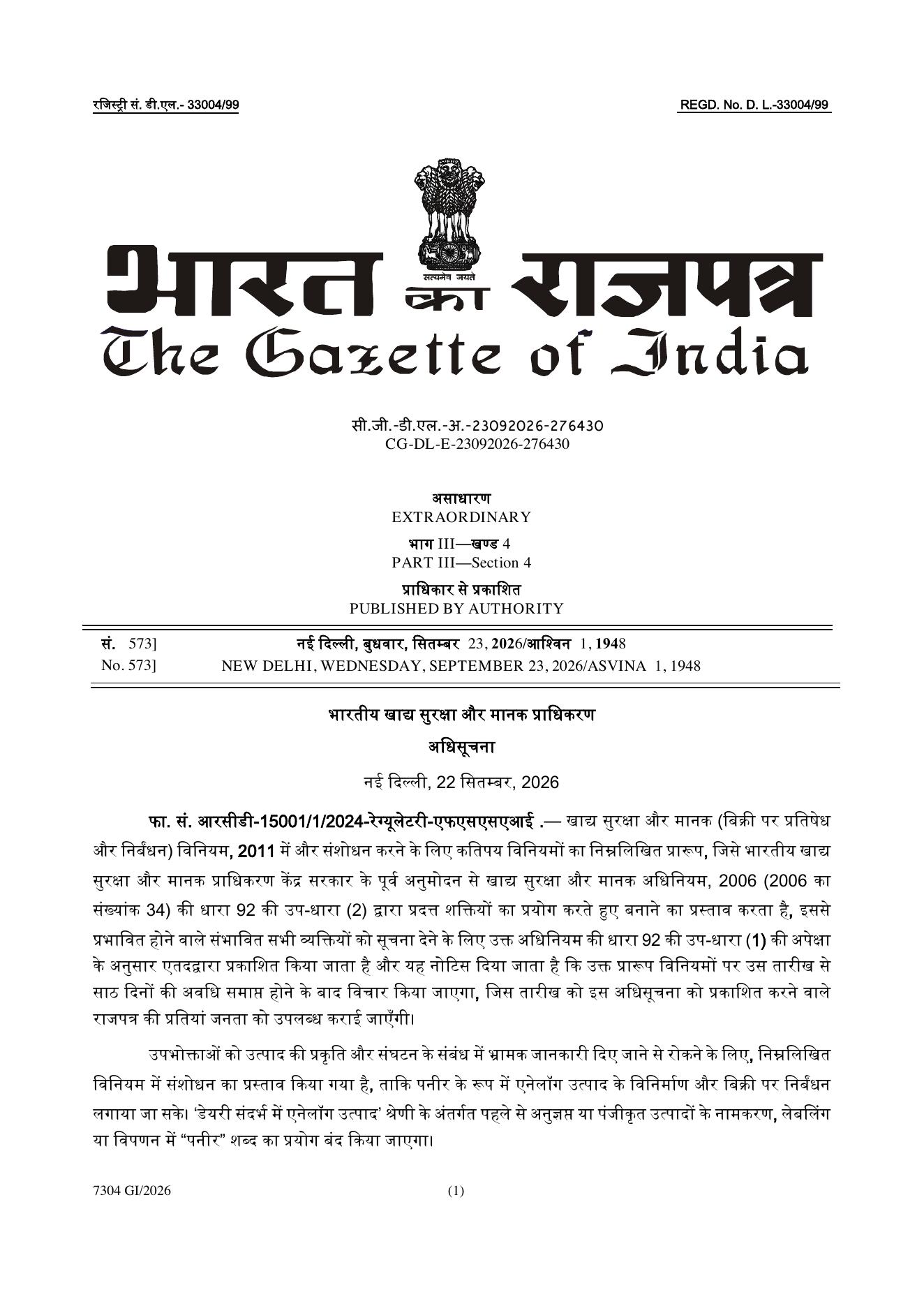
FSSAI Draft Paneer Rule Targets Misleading Non-Milk Dairy Analogue Labels
The Food Safety and Standards Authority of India has proposed a draft amendment to prevent non-milk analogue products from being represented as paneer, a...

Dabur Begins Label Changes After FSSAI Stops Misleading 100 Percent Food Claims
Dabur has begun changing product labels after the Food Safety and Standards Authority of India told the company to stop selling food products carrying...

PepsiCo India Drops Energy Label From Sting After FSSAI Category Order
PepsiCo India has started removing the word "energy" from new Sting cans and bottles after the Food Safety and Standards Authority of India moved against the...
