IMD Puts Odisha On Extremely Heavy Rain Watch As Monsoon System Strengthens
The India Meteorological Department has warned of heavy to very heavy rainfall across several regions, with extremely heavy rainfall likely at isolated places over Odisha on July 27.
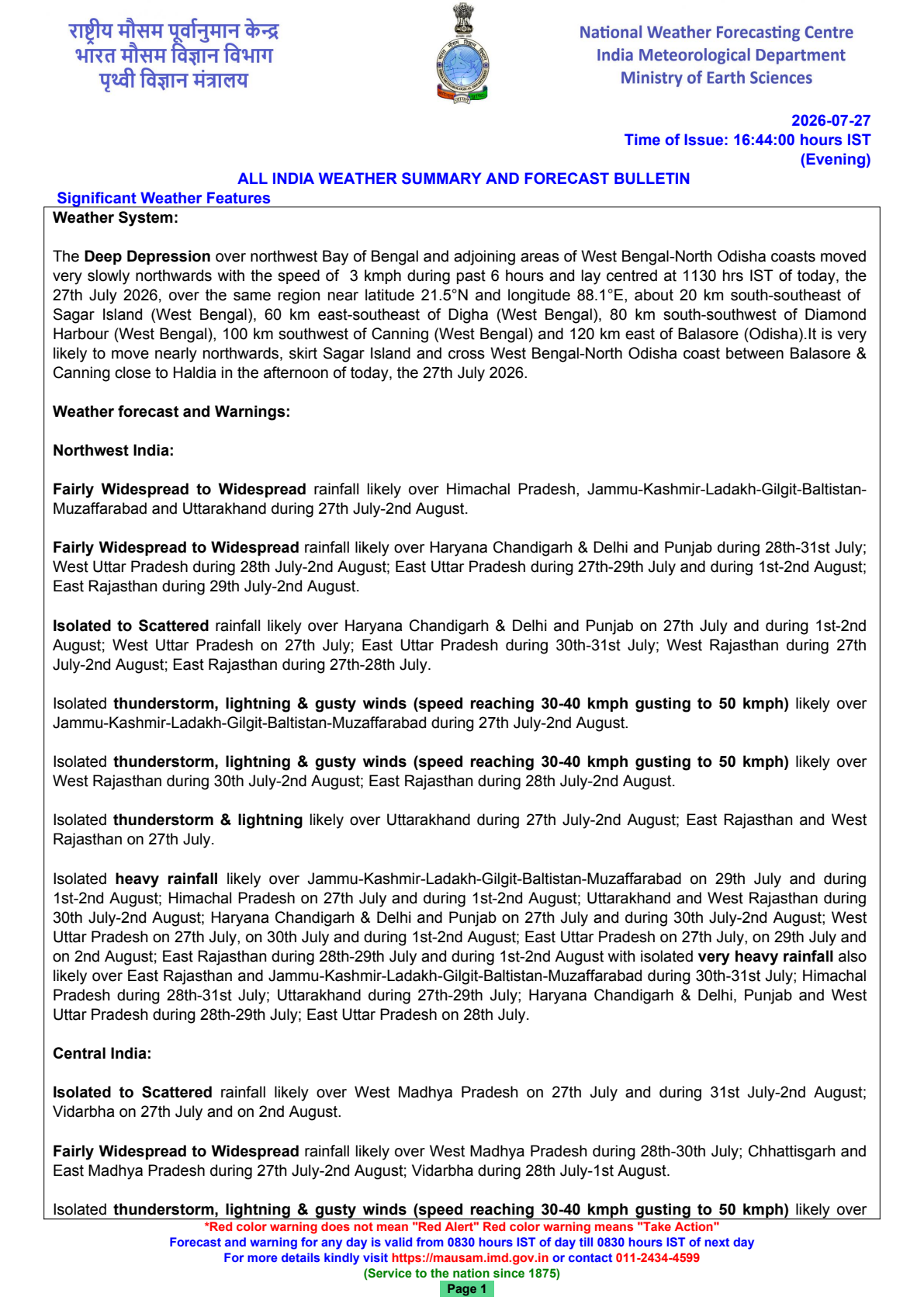
The India Meteorological Department has warned of heavy to very heavy rainfall across several regions, with extremely heavy rainfall likely at isolated places over Odisha on July 27. The development was selected for today because it is recent, source-verifiable and relevant to The Indian Daily Post audience across India and the diaspora.
The verified facts are clear. The official IMD bulletin says forecasts are valid from 8:30 am IST of the relevant day to 8:30 am IST the next day. IMD warned of thunderstorms, lightning, gusty winds and a thundersquall over Odisha on July 27. The bulletin covers rain windows across parts of eastern, central, western, northeastern and southern India through early August. Economic Times reported that Tuesday rain alerts covered Maharashtra, Gujarat, Uttar Pradesh, Jammu and Kashmir, Karnataka, Odisha and West Bengal among other areas. These points come from the source material recorded in the internal pack, and source URLs are intentionally excluded from the public copy.
The alert matters because intense monsoon rain can vary sharply by district and can cause flooding, landslides, transport disruption and power problems even when nearby areas see only routine showers. The wider context is that Indian readers need straight, usable reporting that separates confirmed developments from speculation. This story has immediate public relevance because it affects decisions by citizens, businesses, travellers, investors, students, regulators or local authorities.
The practical impact will vary by audience. Residents should follow district advisories, avoid flooded crossings, keep away from swollen streams and check railway, road and airline updates before travel. For many readers, the headline is only the starting point. The useful question is what changes now, who is responsible for the next step, and what signs would show that the announcement is turning into real-world action.
There are also limits to what can be said today. The available source material confirms the main development and the key numbers or official positions, but it does not prove every downstream consequence. The safest reading is therefore cautious: treat the reported facts as the base, avoid claims that go beyond them, and watch for official updates, company statements, court records, regulatory filings or local advisories as the story develops.
Authorities need drainage clearing, rescue readiness, traffic diversion, dam monitoring and clear local messaging before rainfall peaks rather than after disruption begins. This is the part of the story that will matter after the first news cycle. A strong announcement can fade if implementation is weak, while a technical administrative step can become important if it improves everyday outcomes.
The story will be worth revisiting if fresh evidence changes the scale, timing or accountability picture. Until then, the responsible approach is to publish the verified core, give readers the operational context, and avoid filling gaps with assumptions. That keeps the article useful without overstating what the sources currently support.
Related Stories
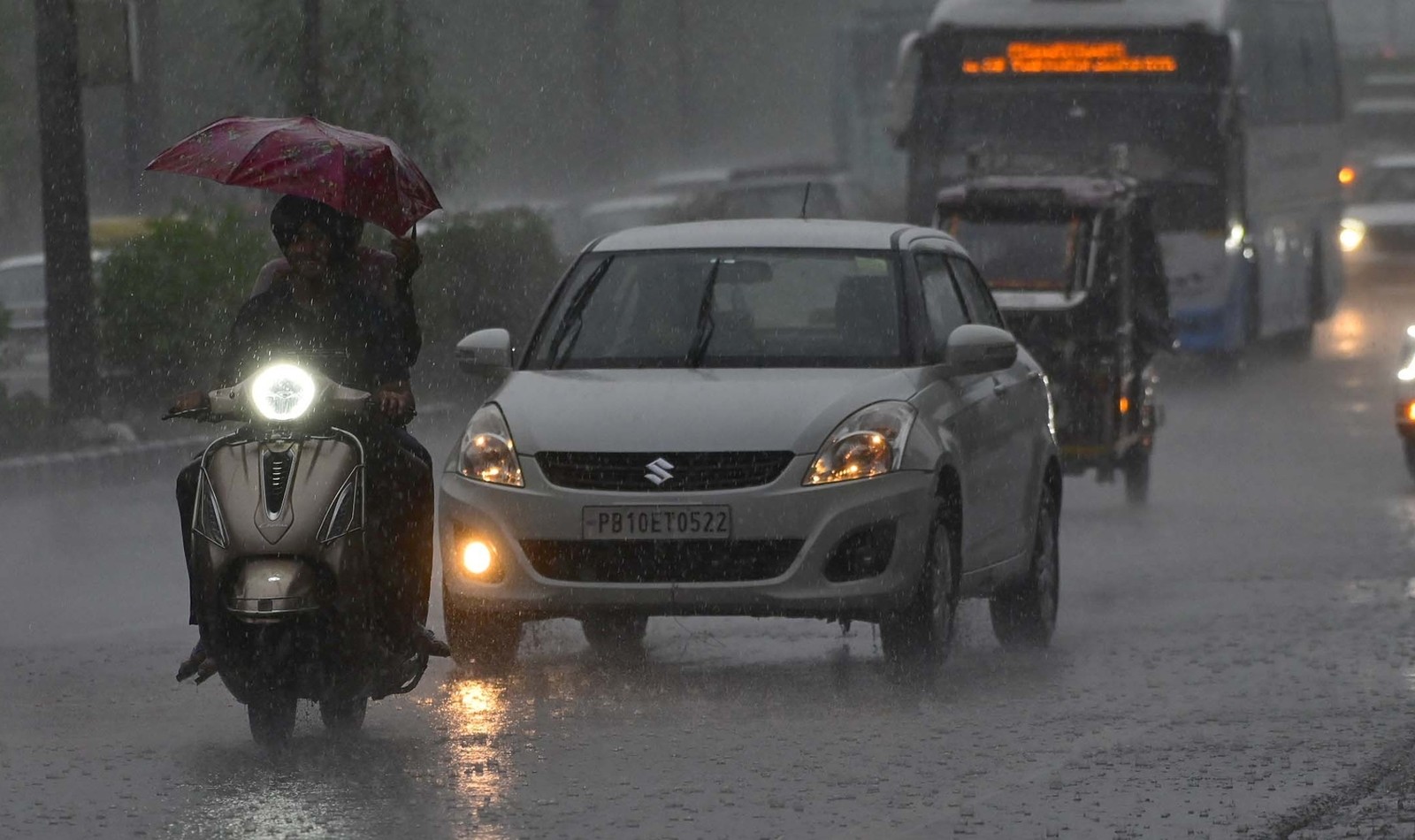
Delhi's Red-Alert Rain Turns A Weather Break Into A Commute Stress Test
Heavy rain, thunderstorms and an IMD red alert brought cooler air but also waterlogging and morning traffic risk across the National Capital Region.

Delhi's Weekend Rain Window Comes With A Dust-Control Warning
Rain, thunderstorms and winds up to 50 kmph may give Delhi-NCR temporary relief, but high minimum temperatures and construction dust keep the air-quality risk alive.
Delhi's Partly Cloudy Forecast Keeps The AQI Watch In Place
IMD's local forecast for New Delhi-Safdarjung shows partly cloudy skies on October 8 after the scattered-rain window, with temperatures expected around 34 and 22 degrees Celsius.