Bhavin Turakhia Mukesh Bansal And Other Indian Unicorn Founders Shift Their Second Acts To AI
A fresh wave of Indian unicorn founders is moving into artificial intelligence, launching AI-native ventures rather than bolting AI onto older software.
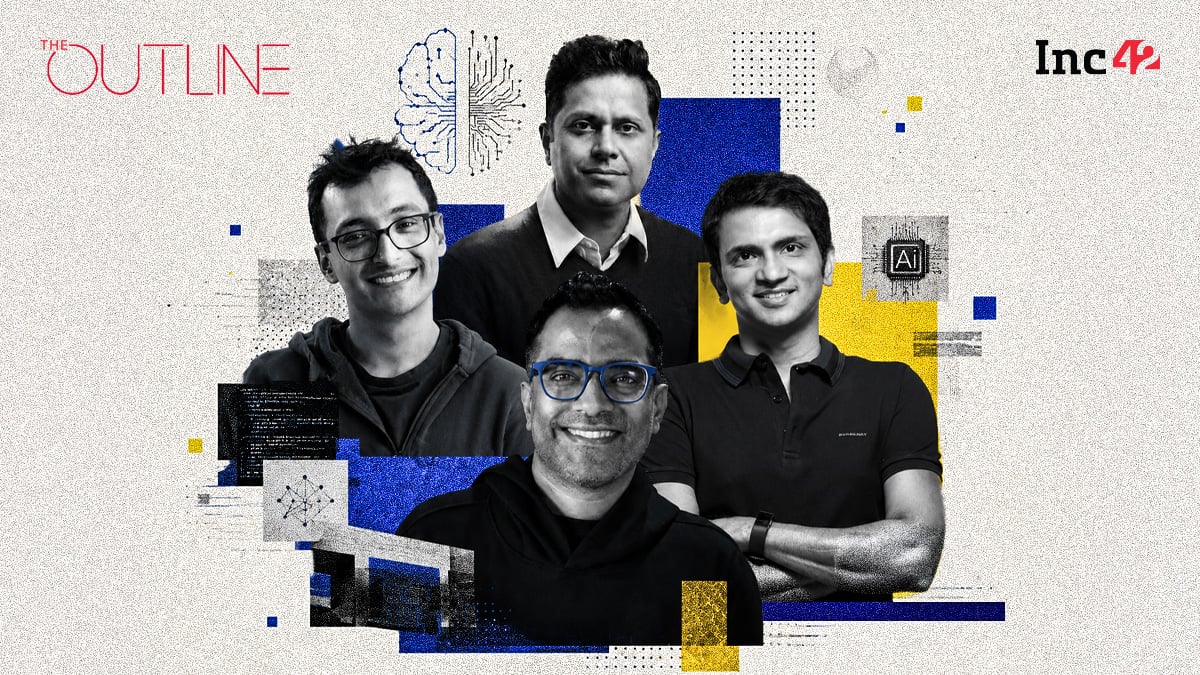
A fresh wave of Indian startup founders is moving into artificial intelligence, not as a feature bolted onto older software but as the starting point for new companies. Several founders who helped build India's first major internet and mobile businesses are now launching AI-native ventures. The most recent example is Zeta founder Bhavin Turakhia, who has launched Neo, an AI-native workplace platform backed by a $30 million personal investment.
The pattern is wider than one announcement. Mukesh Bansal, who built Myntra and later co-founded Cult.fit, was an early mover through Nurix AI, which is developing enterprise AI agents for customer support, sales and internal operations. Former Dunzo co-founder Mukund Jha is building Emergent, focused on AI-powered coding tools. Flipkart co-founder Binny Bansal is applying AI through Optra to ecommerce operations and supply chains. Practo founder Shashank ND is building Cent, a healthcare venture focused on advanced diagnostics, while Zetwerk co-founder Rahul Sharma has moved into an AI robotics startup.
This is a founder story because experience is the asset being redeployed. These entrepreneurs already know how to raise capital, hire senior teams, sell to enterprises and survive the operational mess that comes with scaling. That credibility gives them an advantage over first-time founders at seed or Series A stage. Investors also tend to listen when a repeat founder says a market is ready. In the AI cycle, that may matter because customers are no longer satisfied with experiments. They want software that cuts costs, improves speed and handles measurable work.
But the second act is not guaranteed to be easier. AI companies need more technical depth and more infrastructure spending than many consumer internet startups required a decade ago. Model access, GPU costs, enterprise security, data governance and talent competition can quickly turn a promising idea into a capital-intensive race. Indian founders also face global rivals with vast funding and established distribution.
The opportunity for Indian founders is to build where global platforms are still too broad. Customer support in Indian languages, supply-chain workflows for local commerce, hospital diagnostics, small-business operations and enterprise processes that are specific to Indian markets could all reward founders who understand local complexity. The bigger signal is that India's startup veterans see AI as a platform shift comparable to smartphones and digital payments.
That proof will likely come from revenue quality rather than launch noise. Enterprise buyers may test many AI tools, but they renew only the products that fit existing workflows, pass compliance checks and make teams visibly more productive. The founders named have already learned that distribution, onboarding and customer success matter as much as product vision. If their AI ventures can solve specific operational problems without creating new governance headaches, India could see a second generation of startup leaders move from consumer internet fame into globally relevant enterprise software.
Related Stories
C-DOT and IIT (BHU) Open Sixth Telecom Research Centre
A new C-DOT centre at IIT (BHU), Varanasi will focus on 5G Advanced, 6G, AI, quantum technologies and cybersecurity.
Rural Attendance App Update Adds Offline Checks and Stronger Safeguards
The upgraded NMMS app adds liveness checks, device security and offline attendance recording for workers under VB-G RAM G.
India Mobile Congress Build-a-thon Turns 5G Problems Into Agentic AI Prototypes
Teams at India Mobile Congress developed telecom-focused agentic AI prototypes, with policy, security and network troubleshooting built into the challenge.