ZEE5 FIFA World Cup Complaints Put India's Sports Streaming Reliability Under Scrutiny
Viewer complaints over ZEE5's World Cup streams turn broadcast rights into a wider technology story about reliability, device access, pricing clarity and streaming infrastructure.
ZEE5's FIFA World Cup coverage has become a technology story as much as a sports-broadcasting story after Indian viewers complained about buffering, crashes, login problems and video-quality limits. The Economic Times reported that fans raised complaints on Reddit and X after ZEE Entertainment secured Indian rights through a last-minute deal. The report said some viewers were frustrated by the absence of 4K streaming, with ZEE5 offering Full HD up to 1080p on supported devices and web-browser quality capped at 480p because of anti-piracy measures described on the company's support page.
The complaints matter because live sport is one of the hardest tests for any streaming platform. Unlike a film or serial, a match cannot be meaningfully delayed without losing its value. Viewers watch together, react together and complain together. If a stream buffers during a goal, penalty, toss, opening ceremony or final over, the technical failure becomes part of the event itself. That makes sports streaming a public reliability test.
The World Cup raises the stakes further. The 2026 tournament is larger than previous editions, with 48 teams and 104 matches across North America. Indian viewers often watch at late hours, creating concentrated demand spikes around marquee games. A platform carrying such an event needs enough capacity, device support, authentication reliability, payment clarity and customer service to handle sudden surges. If any one layer fails, the entire experience feels broken.
The Economic Times report also pointed to pricing concerns around a Rs 799 World Cup package and confusion over device access. That is not a small detail. Streaming platforms increasingly sell event-specific subscriptions, and users expect the purchase terms to be clear before they pay. If customers believe device limits, quality expectations or package inclusions changed after purchase, the issue moves beyond inconvenience into consumer trust.
For ZEE, the rights are strategically important. Sports streaming in India has been dominated by larger rivals, and football rights give ZEE5 a chance to build a serious sports audience. But sports audiences are unforgiving because they can compare platforms instantly. A viewer who has seen stable cricket, football or Formula One streams elsewhere will judge every freeze and pixel drop harshly.
There is also a broader technology question. India has millions of users comfortable with digital payments and over-the-top video, but live premium sport requires more than a content library. It needs cloud scaling, content delivery networks, app stability, device testing, anti-piracy controls that do not punish legitimate users, and fast support when things go wrong. The strongest platforms make that infrastructure invisible. The weakest make viewers think about it constantly.
ZEE5 can still recover if it fixes stability, communicates clearly and handles complaints transparently. Early tournament problems do not have to define the full event. But the company needs to treat the backlash as product feedback, not only social-media noise.
For India's streaming market, the lesson is clear. Content rights can bring users to the door, but reliability keeps them there. In live sport, the technology is not backstage. It is part of the match-day experience, and fans will judge it in real time.
Related Stories
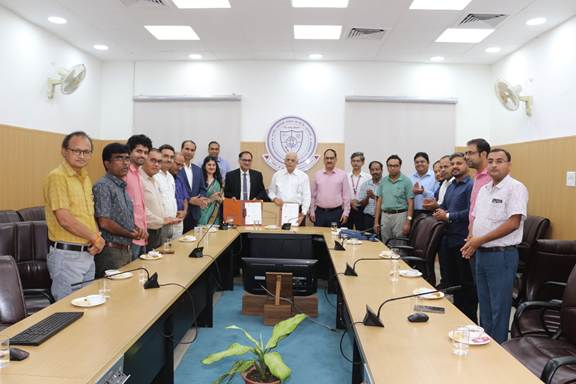
C-DOT and IIT (BHU) Open Sixth Telecom Research Centre
A new C-DOT centre at IIT (BHU), Varanasi will focus on 5G Advanced, 6G, AI, quantum technologies and cybersecurity.
Rural Attendance App Update Adds Offline Checks and Stronger Safeguards
The upgraded NMMS app adds liveness checks, device security and offline attendance recording for workers under VB-G RAM G.
India Mobile Congress Build-a-thon Turns 5G Problems Into Agentic AI Prototypes
Teams at India Mobile Congress developed telecom-focused agentic AI prototypes, with policy, security and network troubleshooting built into the challenge.